
Aluminium Boats: Design That Can Actually Be Built
Aluminium Boats: Design That Can Actually Be Built
As the saying goes, paper accepts everything, and these days so does a computer. In aluminium boat design, drawing a beautiful boat on screen is the easy part. Building it in a reasonable time and for a reasonable price is the real art.
I talked about this at the 10th Poland Boat Show in Warsaw this October, in my presentation “Projekt, który da się zbudować” (“A Design That Can Actually Be Built”). Here’s the aluminium side of the story.
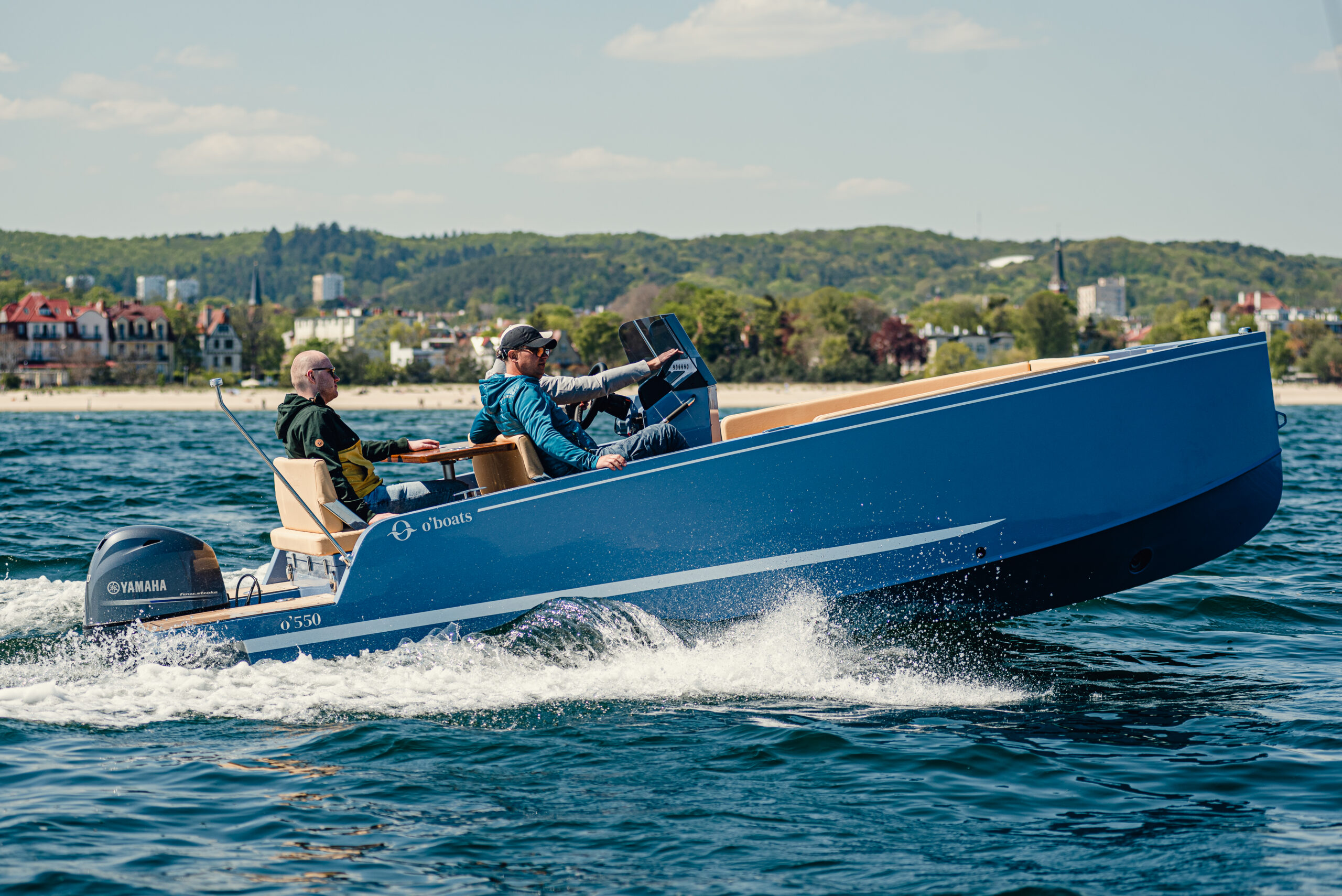
The o’550 out on the water. Every curve you see here first had to be possible to bend in the shipyard.
Talk to the Shipyard Early
I have huge respect for boatbuilders. More than once they have rescued a badly designed part right there on the shop floor. We designers bring creativity and knowledge, but we don’t always know how something will be made, or whether it can be made at all.
That’s why, in aluminium boat design, the conversation with the shipyard should start as early as possible. If the yard isn’t known yet, the design can still go ahead. But as soon as it is, we sit down together and go through it. A change on the drawing takes a few clicks. A change on a part that’s already been cut costs material, time and money.
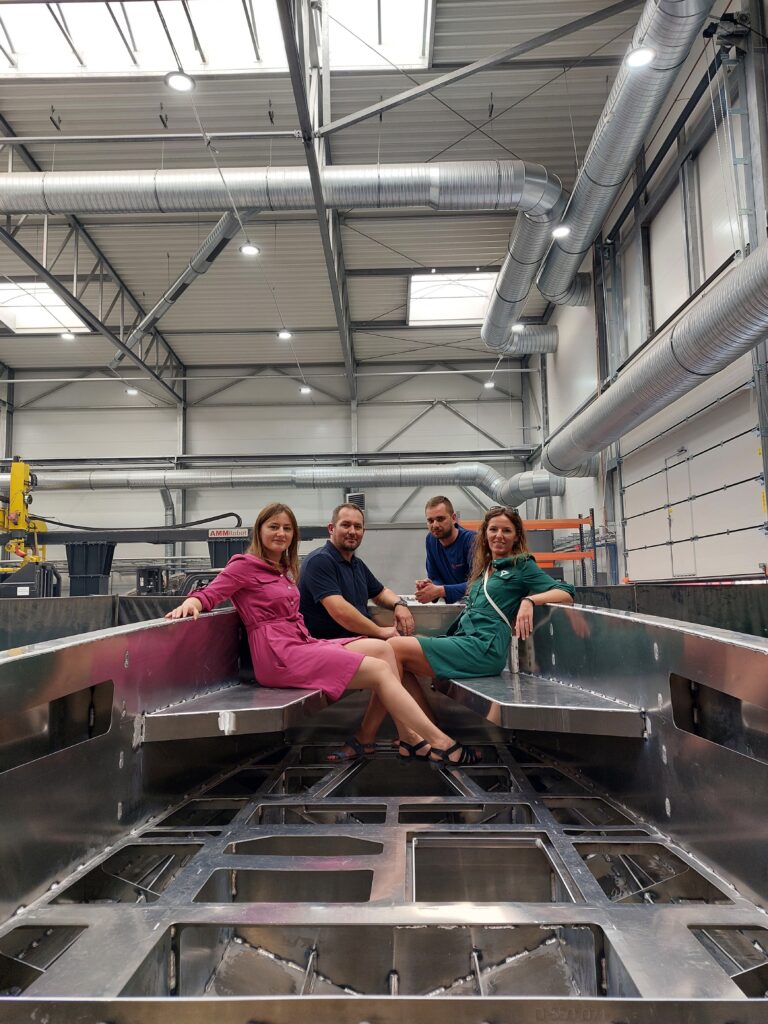
Designers and builders together inside the bare o’550 hull. This is where the best decisions are made.
Know the Machines Before You Draw
Before I design, I want to know:
- what bending radii the yard’s machines can achieve,
- how they cut and weld,
- which plate thicknesses they use most,
- and what sheet sizes they work with.
If I draw a radius their machines can’t bend, the part has to be split or bent by hand. Extra work, extra cost. And if I know the sheet size, I can nest the parts so there’s as little offcut as possible. A small detail that can really cut the material order on a bigger boat.
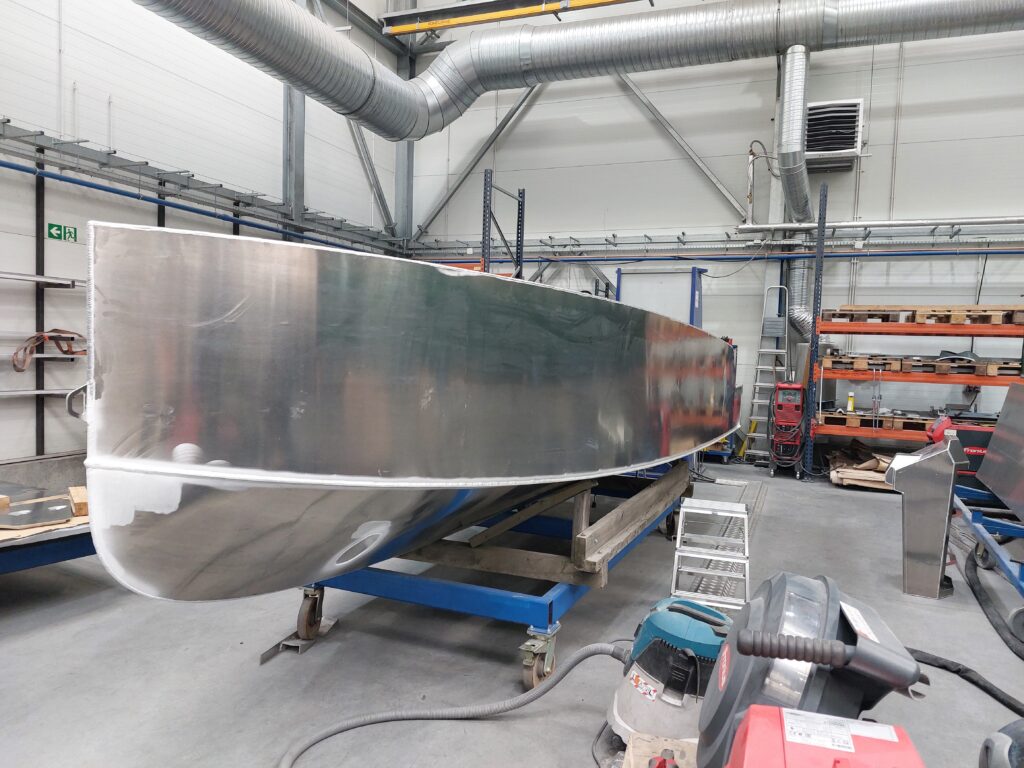
Clean, fair plates come from designing around the yard’s own machines and sheet sizes.
Strong on Paper, Wavy in Reality
Good aluminium boat design starts with the strength rules, and we designers focus on meeting them. But a structure can pass every calculation and still ripple or distort during welding, for example when the stiffeners are spaced too far apart.
Experienced production people spot these places before they happen. Sometimes they’ll even suggest a slightly thicker plate than the rules require. It costs a bit more, but it pays for itself in less fairing and straightening later.
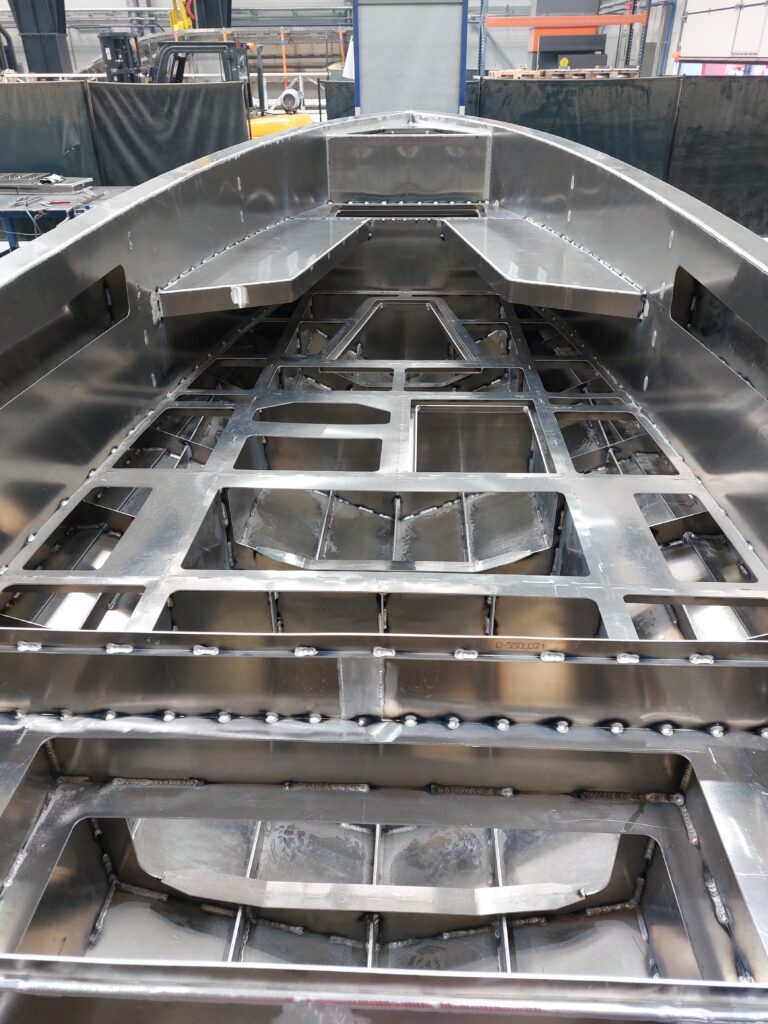
Frames and stiffeners of the o’550. Their spacing decides not only strength, but whether the plates stay straight after welding.
Can the Welder Actually Reach It?
In aluminium boat design, it’s easy to forget about access. If the welder can’t reach a seam, or a space gets closed off too early, the same joint can take many times longer. The shipyard sees this immediately in the 3D model. The same goes for the “small things”, like how an edge is finished. For us it’s a line on a drawing. For the yard, it can mean hours of work.
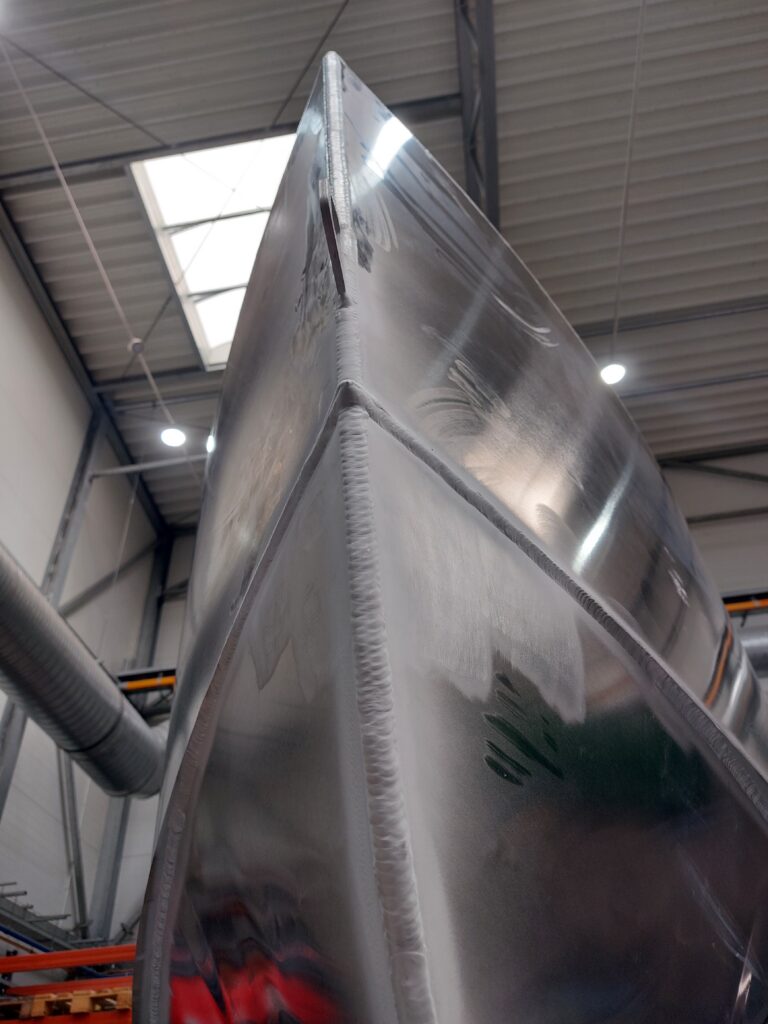
The bow seam. A joint like this is quick to weld only if the welder can actually reach it.
Fewer Profiles, Fewer Thicknesses
This is where aluminium boat design really saves money. If I design with the profiles the yard already has in stock, price and lead time drop straight away. A few repeatable profiles and a few standard plate thicknesses mean bigger orders of the same material, better prices from suppliers, less storage and less waste. And off-the-shelf hatches, windows and deck fittings instead of custom ones save even more.
Build in Sections, Plan the Systems
Smart aluminium boat design means building in sections, which is faster and simpler. Parts made separately can be welded comfortably outside, not inside a cramped hull. And if I plan routes for cables and pipes, bulkhead penetrations and reinforcements from the start, nobody has to improvise on site. Servicing the finished boat is easier too, and the yard often knows best which way the systems should run.
Some yards even have their own engineering offices that check the design in detail. An extra pair of eyes before the first plate is cut is priceless, especially on a prototype.
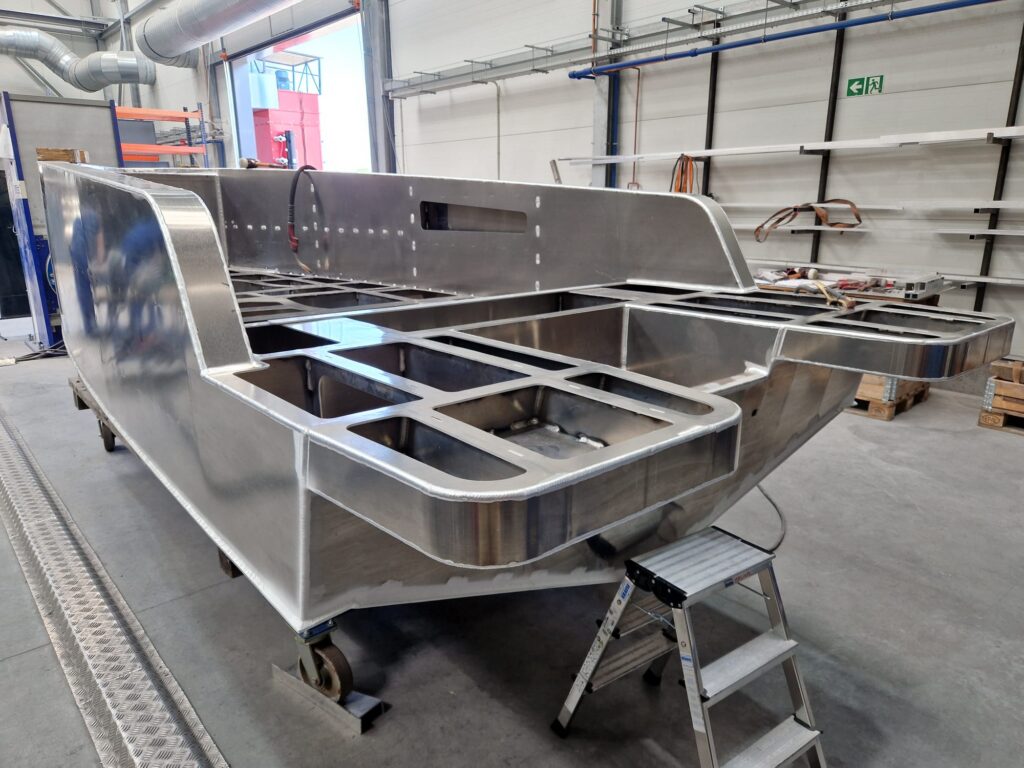
The open structure on its cradle: plenty of room to work, weld and plan the routes for cables and pipes.
To Sum Up: Aluminium Boat Design That Works
Good aluminium boat design isn’t just a strong and beautiful boat on screen. It’s one that can be built with sensible effort, material and money. And that happens when the designer and the shipyard talk from day one, not when something on the build suddenly doesn’t fit. ⚓
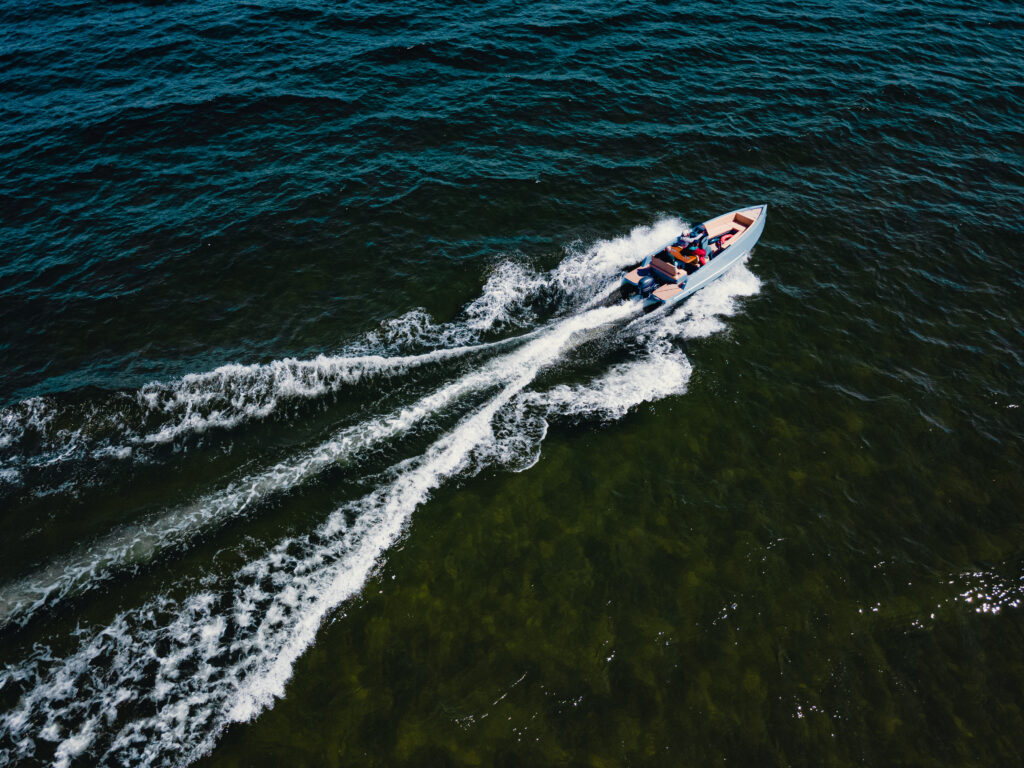
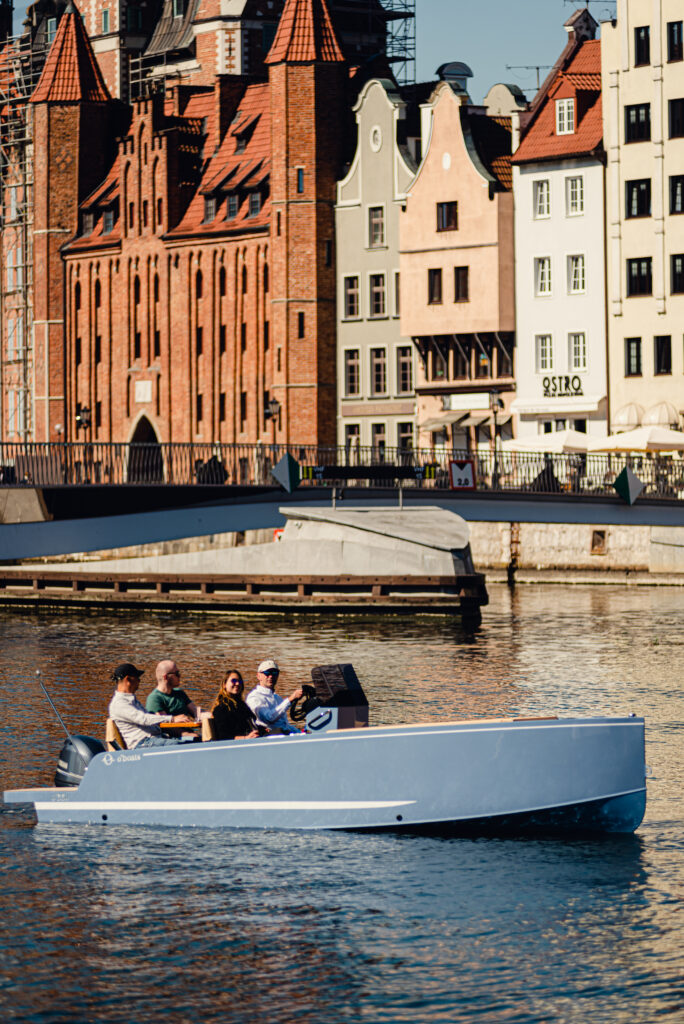
From the shipyard hall to open water: a design that could actually be built.
If you are planning an aluminium boat and want a design that is ready for the shipyard from day one, take a look at our portfolio of projects. And if you have any questions or would like to talk about your own project, feel free to get in touch with me. I’ll be happy to talk!
BEST REGARDS!!!
Co-founder/Chief Designer
tel.: +48 500 204 025
e-mail: marta@intuition-yachts.com
#AluminiumBoats #BoatDesign #YachtDesign #Shipyard #BoatBuilding #DesignForProduction #PolandBoatShow #IntuitionYachts